
Country Guides
China Customs Data (2026): Pick the Small Question First
In a market this large, the fastest way to a usable answer is not a bigger search — it is a narrower question. How to shrink first, then search.
INSIGHTS
Buyer-search workflows, HS code guides, and market analysis built on customs data.
In a market this large, the fastest way to a usable answer is not a bigger search — it is a narrower question. How to shrink first, then search.
With trade and shipping layers but no statistics layer, the records themselves are the aggregate. How to count a market honestly — before the counting counts you.
Both directions carry the same six fields, English records and air freight — but no regular updates. How to work a complete dataset as a census rather than a feed.
Demand in an archipelago is split across landing points, not concentrated in one. How to read distribution first — and why that order changes who you approach.
India's file refreshes on a regular cadence — which turns it into a comparison instrument. How to use consecutive pulls to separate growing accounts from busy ones.
Canada's import record lists only exporters, HS code and quantity — but shipping, statistics and a company directory sit behind it. How to let each layer carry the weight the record cannot.
Both directions carry the same six fields, so the same product can be followed on both sides. How to read alignment — and what it does and does not prove.
Togo runs import and export windows with different field sets, in English. How to read each side for what it can answer — and combine them into a gap analysis.
A single trade layer under a NEW flag keeps the working set small. The discipline that pays here is knowing exactly what each rung of evidence licenses — before acting.
A gateway economy moves goods for its neighbours as well as for itself. How to separate end users from redistributors in Senegal's trade records — and why the distinction changes the approach.
Popular topics
Field-tested workflows for finding and reaching verified buyers.
Integrate customs data into your own systems via API, or order tailored market research and competitor analysis reports delivered by our trade data team.
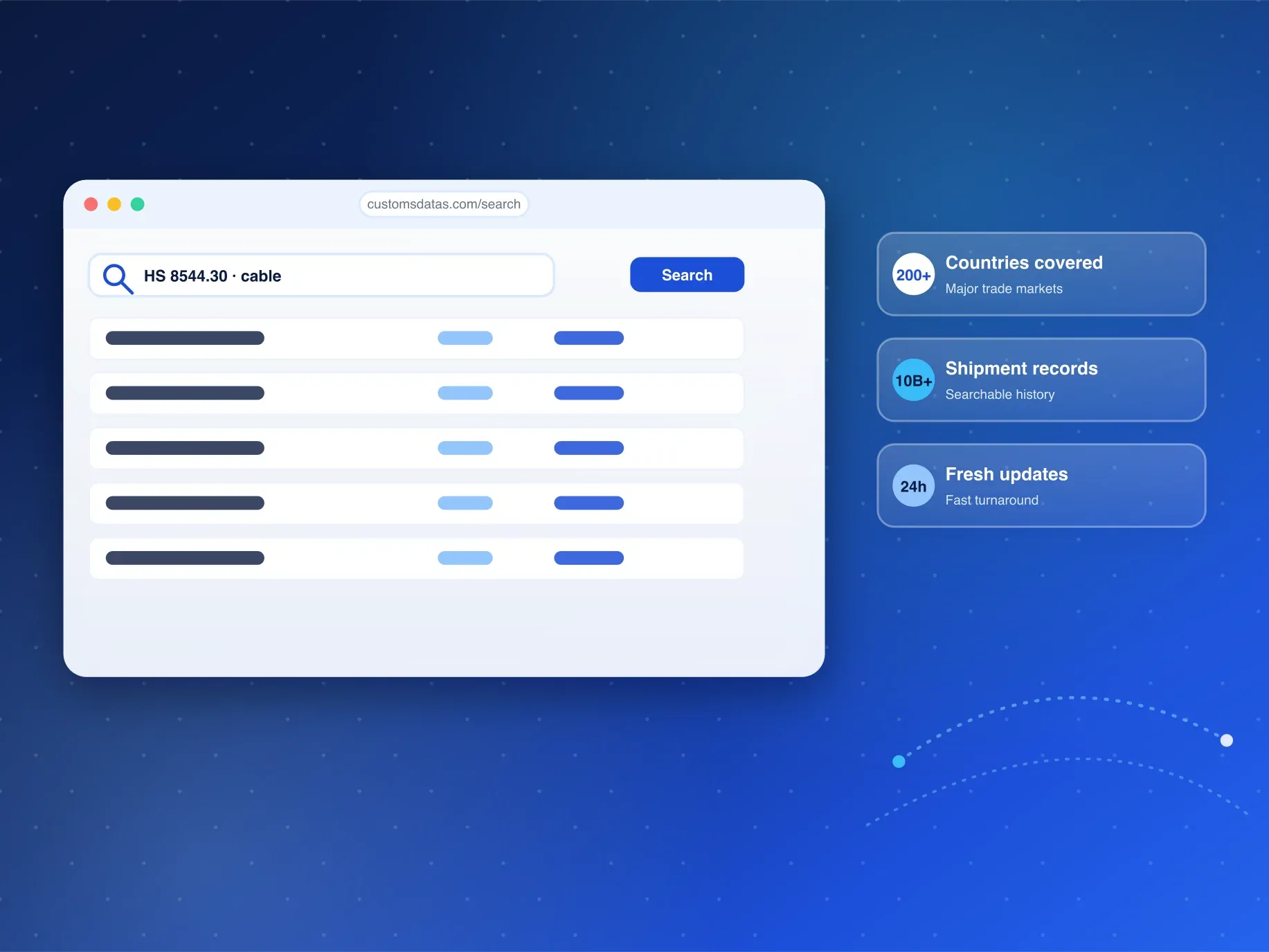
Search and analyze 10 billion+ customs shipment records across 200+ countries and regions. Track real import-export transactions by product, HS code, buyer or supplier.
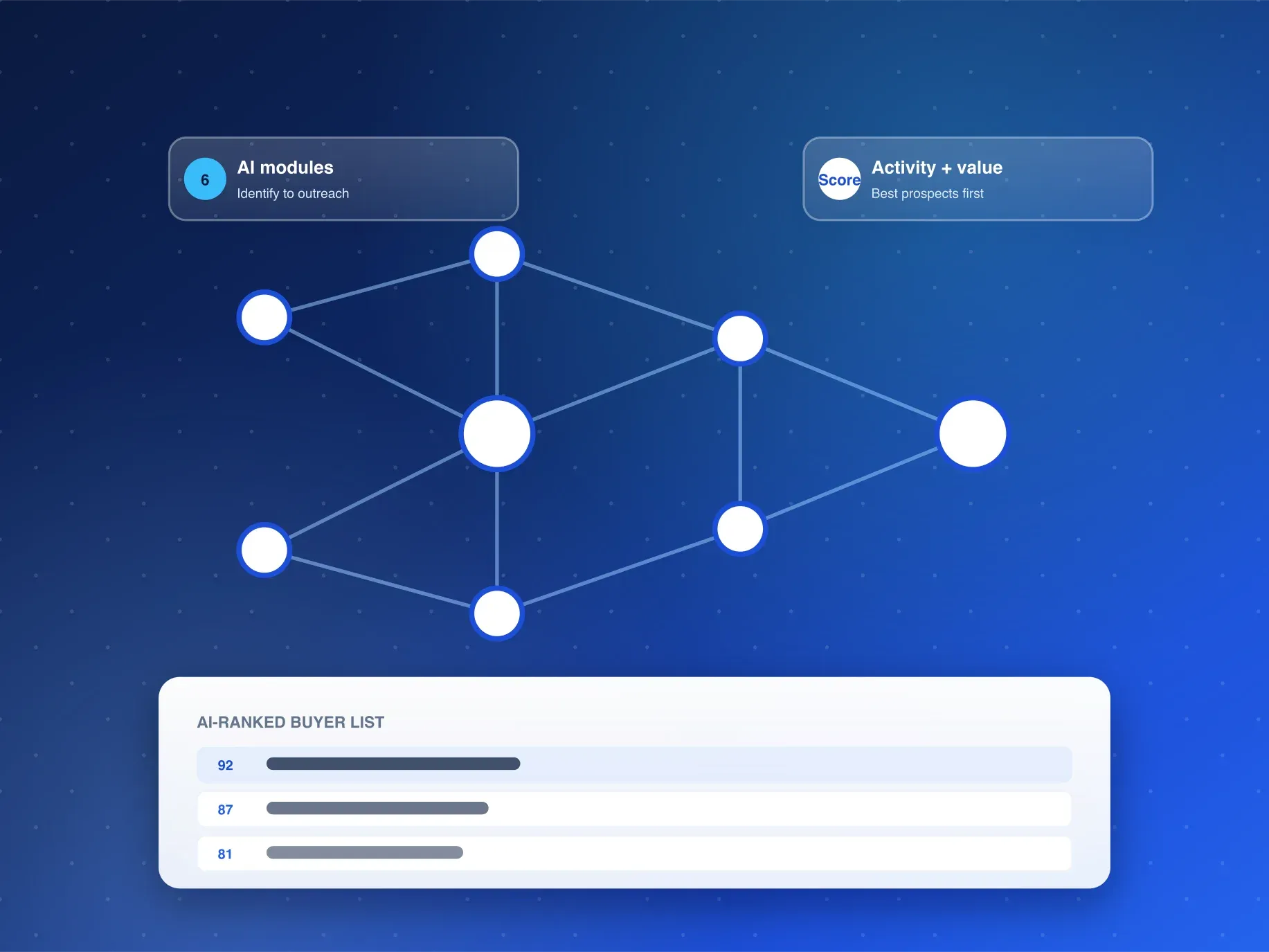
Six AI modules that identify high-value buyers, score their potential, recommend markets, and generate ready-to-use outreach lists with emails and WhatsApp contacts.