Sep 18, 2026Guides
HS Code Search: A Beginner's Guide to Finding Buyers by Product
What HS codes are, how to find the right one for your product, and how to turn a six-digit code into real buyer lists from 10 billion-plus customs shipment records.
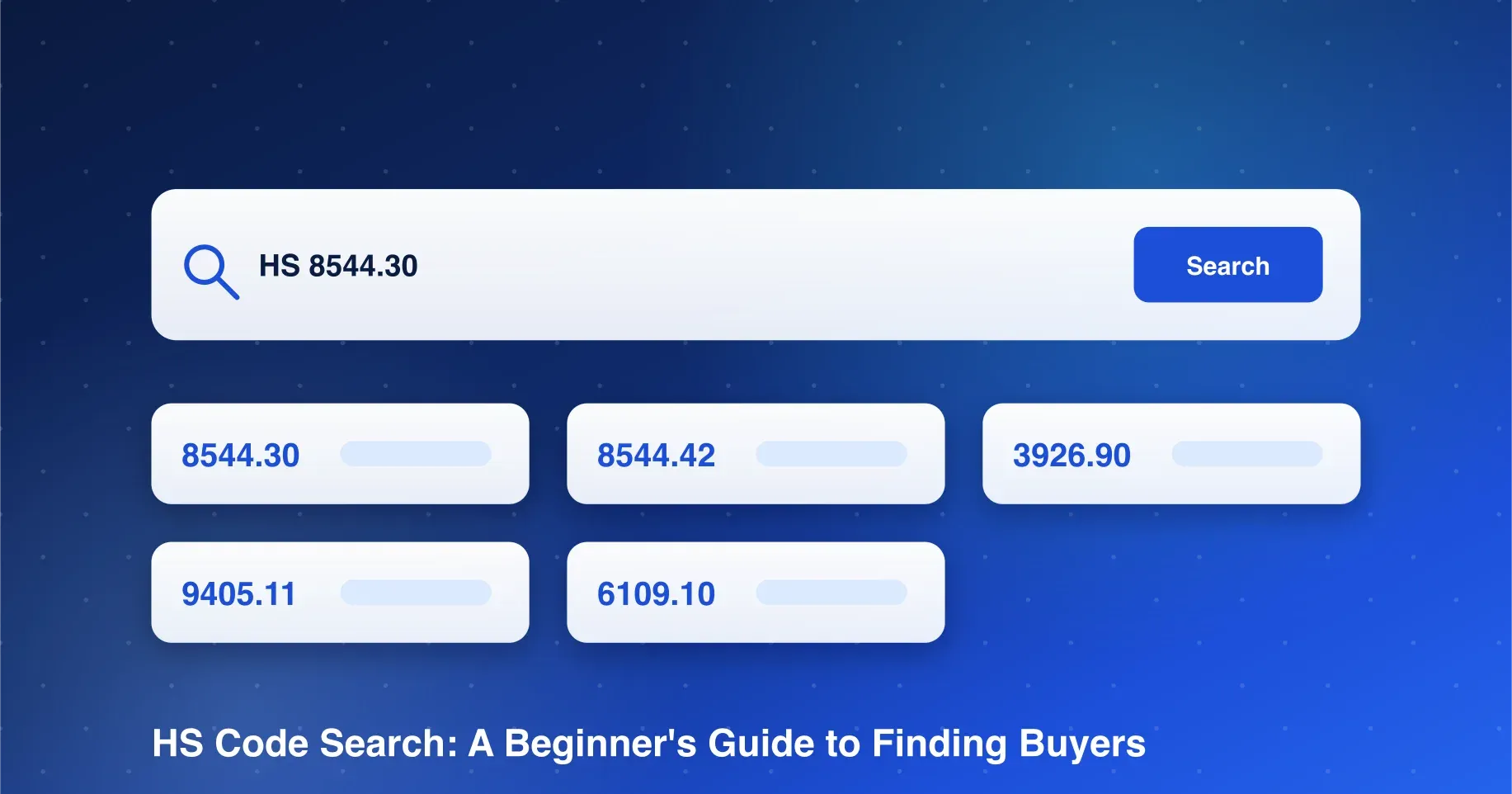
You have a product that deserves overseas buyers, and a folder of trade fair cards that did not turn into orders. If that sounds familiar, the missing tool is probably not another contact directory — it is the HS code, the classification label customs teams use to describe products crossing a border. Search trade data with the right code, and 10 billion-plus shipment records across 200-plus countries and regions stop being noise and start working like a map of who imports what you sell.
The Language That Global Trade Data Speaks
HS stands for the Harmonized System, an internationally agreed way to classify goods in trade. The code is built in layers: the first two digits point to a broad chapter, the next two narrow the heading, and the last two of the first six mark the subheading that most countries report. Beyond six digits, each country adds its own numbers for tariff detail, which is why one product can appear with extra digits in one market and not in another.
Buyer tip: describe your product in plain words first — material, function, and the industry that uses it — then match those words against chapter headings in a public HS index before opening any data platform. A stainless steel sink and a plastic storage bin, for instance, sit in different chapters, so guessing from an invoice title alone can send your search down the wrong branch and cost you a week of lead hunting.
How to Find the Code That Matches Your Product
Start with the product itself, not with the platform. Write down what it is made of, what it does, and which industry buys it. Then look up the candidate six-digit codes in a public tariff index and read the exact wording of each heading, because customs officers classify against that text, not against marketing names. Shortlist two or three plausible codes rather than betting on one, since borderline products often sit between two headings.
Now take those candidates into Customsdatas and search real shipment records by code and by product keyword side by side. Each bill of lading record shows the consignee, the shipper, the product description, the quantity and the value, so within a few screens you can see whether a code carries the kind of goods you actually make. If the descriptions under a code look wrong for your product, drop that code and keep the one that fits.
When Six Digits Are Not Precise Enough
A six-digit code is an international baseline, but national tariffs extend it in different ways: one market may split your product across several longer lines while another keeps it under one. That gap matters when you filter data. Search only the six digits and you pull the whole family of goods; trust a longer national line from one country and you may miss records reported elsewhere. The practical habit is to run the six-digit code first, then narrow only where real record descriptions confirm the split.
Buyer tip: treat the product descriptions inside real records as your classification coach. Pull a sample of records under your candidate code, read what actually shipped, and compare it with your own specification sheet — if many of them describe something else, that code is too wide or simply wrong, and any buyer list built on it inherits the error.
From One HS Code to a Buyer List That Works
With a verified code, the next question is where to look. Sort the countries importing your code by shipment volume and by how recent the activity is, then shortlist a few markets instead of chasing all 200-plus at once. A market with steady, recent shipments of your product is a stronger first target than a huge one where the code barely appears, because frequency tells you whether real demand exists or whether a single large order from two years ago is carrying the total.
Set a simple threshold before building the list: importers with multiple shipments of your code over the past year, rather than a single record. Frequency separates active buyers from accidental ones, and it also shows when they buy — which shapes when your outreach should land.
A name on a bill of lading is not yet a lead. Complete each company with contact details — the Customsdatas buyer database holds 50 million-plus verified buyer records with email addresses and social channels — and note who each buyer currently sources from. The AI suite adds another layer here: its six tools identify high-value buyers, score their potential, recommend markets and even flag which customers your competitors already supply, turning a raw list of names into a prioritized outreach sheet.
Three Beginner Mistakes That Cost Months
The first mistake is searching with a code that is too wide. A chapter-level code returns impressive totals and useless leads, because you cannot tell which shipments are actually your product. Stay at six digits at minimum, and narrow further only when the descriptions support it.
The second mistake is judging buyers by price alone. A high unit value on one record does not tell you whether that buyer orders repeatedly or in what rhythm, and one large order often says more about a single project than about ongoing demand. Read the pattern of shipments — frequency, regularity, growth — not just the value printed on one line.
The third mistake is treating the list as a one-time export of names. Buyers rarely reply to a first email, so plan a follow-up rhythm: a second touch after a week, a different angle after two, and one place where replies are recorded. A decent list worked steadily outperforms a great list contacted once.
Frequently Asked Questions
What is an HS code?
It is the six-digit classification code of the Harmonized System — the label customs authorities use to identify products in international trade, and the field that shipment records are indexed by.
How many digits do I need?
Six digits are the practical baseline for searching across countries, because that is the level markets hold in common; longer national codes add finer detail inside a single market, so start at six and narrow only where record descriptions support it.
Can I search buyers for free?
You can request a free sample from Customsdatas and look at real records for your own product before deciding anything. The team replies within 24 hours (GMT+8), so the simplest way to judge data quality is to see your own market inside it.
Ready to turn one HS code into a real buyer list? Request a free sample from Customsdatas — tell us your product and target market, and our team will reply within 24 hours with actual shipment records of buyers, volumes and frequencies for you to act on.