Sep 18, 2026Market Analysis
Customs Data vs. Trade Shows: Which Finds Buyers Faster?
A cost and results comparison between exhibiting at international trade shows and running data-driven buyer outreach — with a hybrid strategy that works.
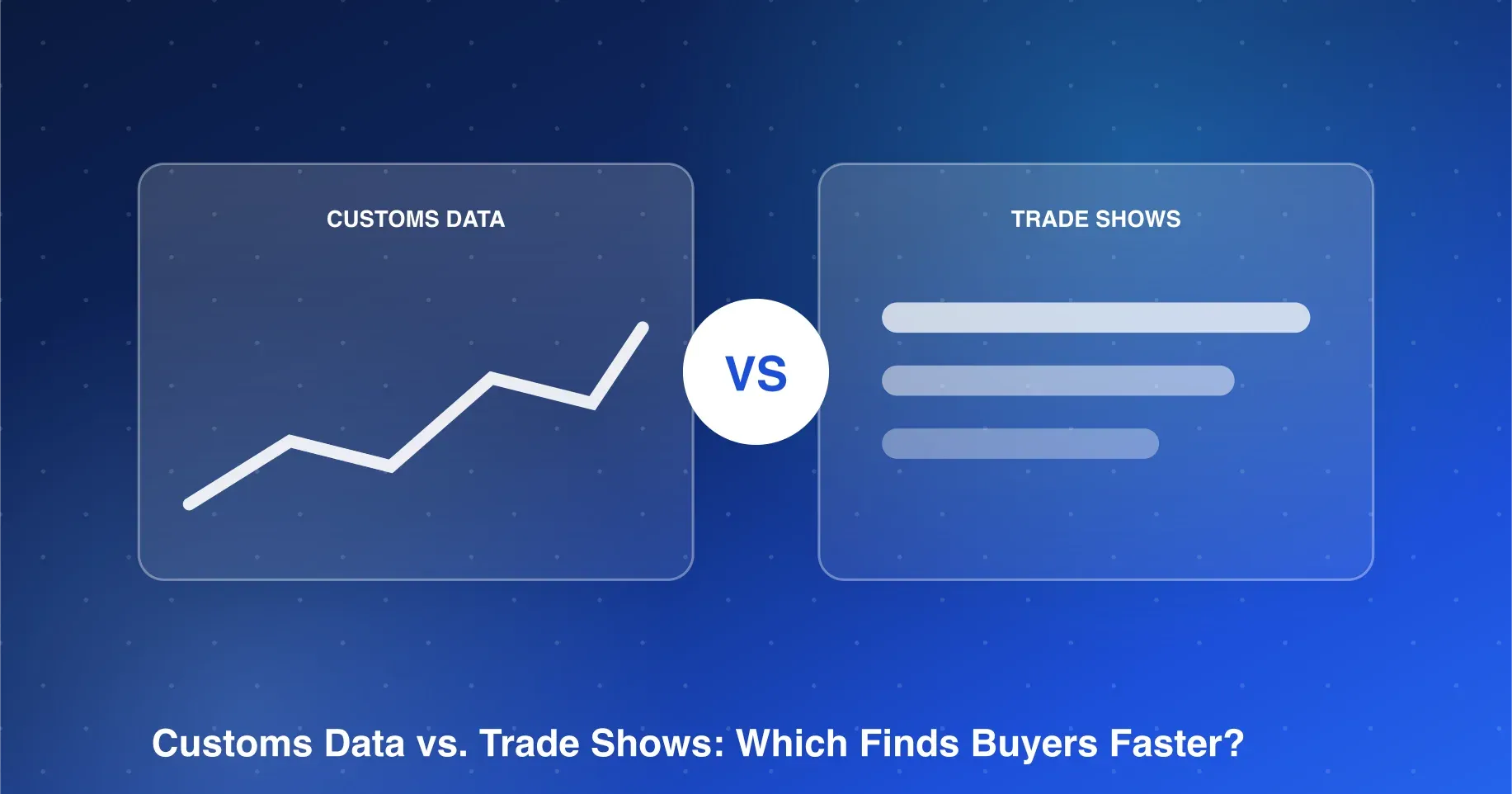
Sooner or later, most export managers sit in the same budget meeting: the sales team wants booth space at the next international fair, while someone else argues that a customs data subscription would stretch the same money further. If that sounds familiar, this article will not declare a winner. It compares the two channels on cost structure, lead quality and speed, so you can decide where your budget does more work.
On the surface the two options look alike, because both promise overseas buyers. They behave very differently once you look at when you pay, what you actually receive, and how quickly a conversation can begin. That difference is what the next three sections unpack.
Two Channels, Two Cost Structures
A trade show concentrates spending into a few intense days. Booth space, stand construction, samples, flights and staff time are committed months in advance, and they are spent whether the right buyers show up or not. The audience is capped by foot traffic: one hall, one city, a handful of days a year.
A customs data subscription spreads its cost across the whole year, covering 10 billion+ shipment records across 200+ countries and regions, searchable by product, HS code, buyer, supplier or country. No stand to build, no flight to book, so the coverage keeps producing leads long after any single event has packed up.
Buyer tip: compare channels on cost per qualified conversation, not on sticker price. A booth that returns a drawer of unsorted business cards can cost more per real opportunity than a subscription that surfaces the importers behind genuine shipments. Judge each channel by what reaches your sales pipeline, not by what the invoice covers.
Lead Quality: Business Cards or Shipment Records?
A business card tells you that someone stopped by a stand. It does not tell you what that visitor imported last quarter, in what volume, or from which suppliers. Booth traffic also mixes in students, agents and competitors studying your display, so a stack of cards is a stack of intentions rather than a record of purchasing.
A bill of lading is different in kind. Customs records show the consignee, the shipper, the product, the quantity and the value of transactions that actually happened. On a platform such as Customsdatas you are not speculating about who might buy — you are looking at companies that already import products like yours, and how often they order.
Scale matters as well. The Customsdatas buyer database covers 50 million+ verified buyers drawn from a base of 260 million+ companies, each record carrying contact emails and social channels for direct outreach. A single exhibition floor, however large, cannot gather that many active importers, distributors and wholesalers in one place.
Speed: When Each Channel Starts Producing
Trade shows run on calendars. You pick the event, reserve space and wait months for the doors to open; the fair ends, and the leads cool off while your team catches up on backlog. This follow-up decay is a structural problem, not a discipline problem — the cards wait in a drawer while inbox pressure builds.
Data-driven outreach starts when you decide to start it. A search by HS code or product keyword can produce a working buyer list within the week, since 10 billion+ records sit ready for immediate queries. Customsdatas adds six AI modules: identify high-value buyers, score their potential, recommend markets, find similar companies, generate outreach lists with emails and WhatsApp contacts, and detect which buyers your competitors supply.
Buyer tip: apply one speed rule to both channels — contact each qualified name within a week, so the conversation is still recent enough to restart. Fast follow-up often separates the exporters who convert from the ones who merely collect contacts.
The Hybrid Play: Data Before the Show, Records After It
For most established exporters the honest answer is sequencing, not choosing. Customs data makes a fair more targeted before you go: pull the importers of your product category in the host market, rank them by shipment frequency, and request meetings with the companies worth a flight. The booth team then works from a schedule of pre-qualified conversations instead of hoping for walk-by traffic.
After the fair, the records keep earning their keep. Match the cards you collected against shipment data to see which contacts genuinely import your category and at what scale; those conversations deserve same-week follow-up, and the rest move to a nurture list. The competitor module adds context too: it shows which buyers in the host market already source from your rivals.
Buyer tip: treat each show as a data project with a badge. Build the meeting list from customs records first, meet those companies second, and verify the cards against real shipments third — in that order, so the stand budget follows evidence rather than hope.
A Decision Checklist Before You Commit
Before you commit the budget, run this checklist against your own numbers rather than against a brochure:
Volume first: how many qualified conversations did last season's fairs actually produce, and what did each one cost once stand, travel and staff hours were counted? If the number is thin, shift weight toward the channel that scales with data instead of floor space.
Coverage second: does the subscription under review cover the markets that matter for your product — Customsdatas works across 200+ countries and regions — and can you search it by the HS codes you sell under? Breadth without precision is a phone book; precision without breadth is a map with missing pages.
Fit third: some products need live demonstrations and long qualification cycles, and a fair retains value there that records cannot replace. Products that reorder on price and specification reward data-driven outreach instead. Match the channel to the way your product is actually bought.
Frequently Asked Questions
Do I still need trade shows if I subscribe to customs data?
Yes — the two channels do different jobs. Shows build trust and put products in people's hands; customs data finds and qualifies buyers at scale during the rest of the year, so exporters who can fund both often get further by letting the data decide who is worth meeting.
How fast can customs data produce a working buyer list?
Days rather than months. A query by HS code, product or country returns importers with real shipment histories, and the AI modules turn those results into scored outreach lists with emails and WhatsApp contacts. If something is unclear, Customsdatas replies within 24 hours (Mon-Sat, GMT+8).
What is the lowest-risk way to test customs data?
Request a sample built on your own product line. Send Customsdatas your product name or HS code and the team will show the kind of buyer and shipment information the platform returns for that exact category, which lets you test lead quality against your trade show pipeline without a large upfront decision.
Ready to see which channel deserves your next budget cycle? Request a free sample from Customsdatas — send your product name or HS code, and within 24 hours you will see the actual importers behind the shipments in your target markets. Then decide how much of next season's budget belongs to a stand, and how much belongs to data.