Country Guides
Tanzania Customs Data (2026): Audit a Seven-Field Mirror Across Import and Export Records
Compare Tanzania import and export records using their seven listed evidence fields, then audit units, values, company names, and sample freshness before drawing commercial conclusions.
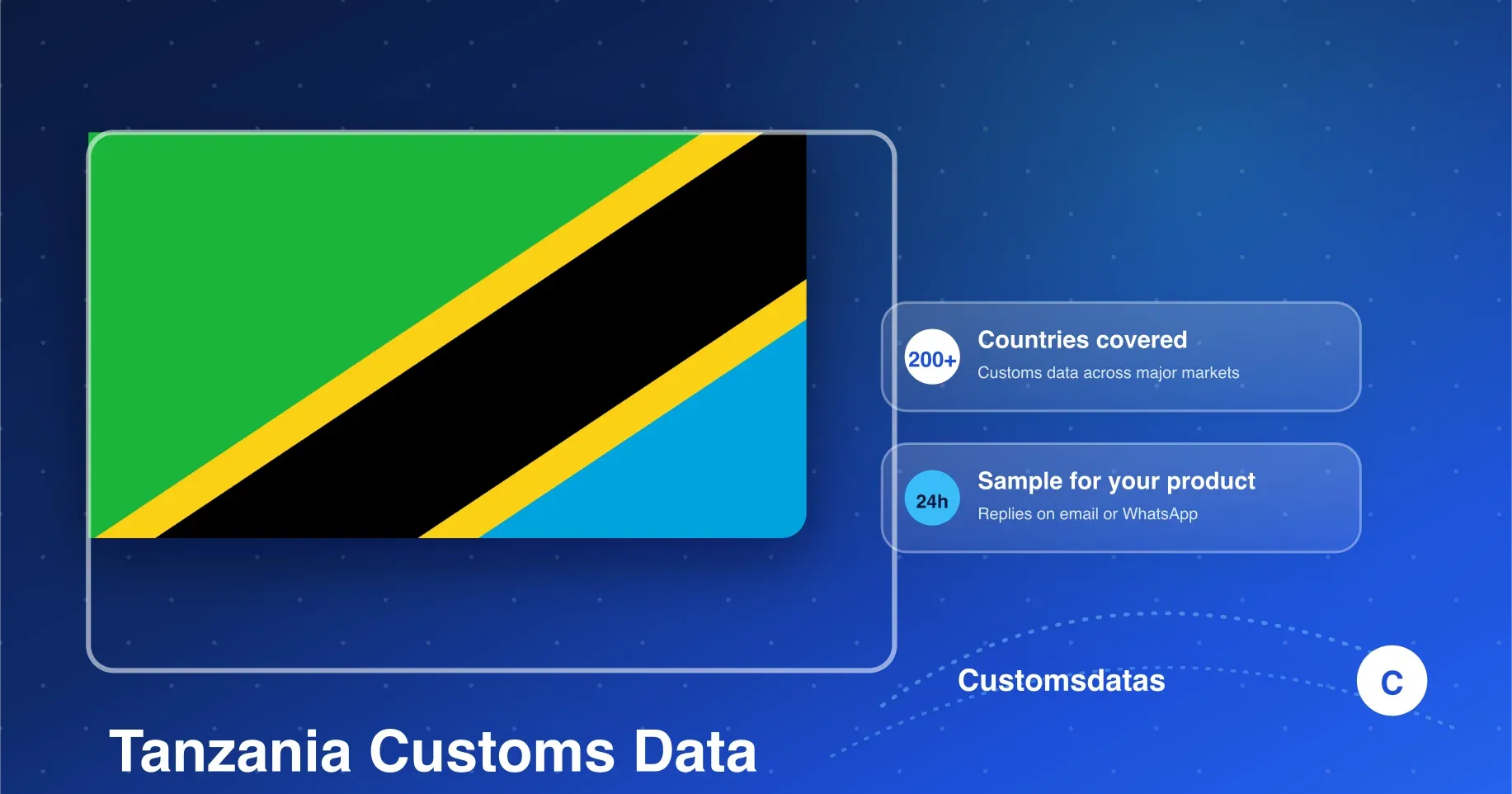
Tanzania customs data offers a distinctive opportunity for structured comparison. The current Customsdatas country matrix lists trade data with seven named fields in both import and export directions: exporters, product descriptions, HS codes, quantity, weight, value and brand. This matching field inventory is a useful starting point for a two-direction audit, but it is not proof that every record contains all seven fields.
The research challenge is to compare like with like without turning apparent symmetry into a false certainty. A product description may be inconsistent, a company name may vary, and numeric fields may use different units. A strong Tanzania brief makes those uncertainties visible and documents exactly how each comparison was made.
Establish the mirror test before extracting a large dataset
Define a small sample for the import direction and another for the export direction using a consistent product scope and documented time range. Preserve the original direction label, search terms and extraction date. The purpose is to test whether the seven fields are populated and interpretable, not to maximize the number of rows on the first pass.
Build a coverage table with one row per field and one column per direction. Mark each field as observed, missing in the sample, or not yet tested. The source matrix confirms field names at the profile level; your sample establishes the practical evidence available for the question being investigated.
Use descriptions and HS codes as two separate checks
Tanzania's field list includes both product descriptions and HS codes in both directions. That combination allows a useful consistency check: does the free-text description plausibly fit the recorded classification? Do not assume that every phrase maps cleanly to one code or that an HS code reveals the exact commercial specification.
Retain the original text before normalizing spelling, abbreviations or language variants. When a description is vague, flag it instead of inventing a more specific product. A reviewer should be able to distinguish source text from any category label added during analysis. This is especially important when generating prospecting lists for narrowly defined products.
Compare exporter names without merging identities prematurely
The exporter field can support company research in each direction, but identical-looking names are not sufficient evidence of the same legal entity. Keep raw names, normalized names and verification status in different columns. A proposed match should have a documented reason, such as an independently checked address or official company record.
Do not interpret a party label as proof of manufacturing capability or willingness to sell. For lead generation, create a candidate tier and a separately verified outreach tier. This distinction lets commercial teams use customs evidence productively without claiming that the dataset itself certifies suppliers or buyers.
Audit quantities, weights and values as a group
Three numeric fields can make a Tanzania dataset look highly comparable. Yet a quantity of one unit may not represent the same measure across records, and weights can require gross-versus-net clarification. Values may differ in currency or valuation basis. Capture those assumptions before calculating ratios or combining totals.
An effective review flags records with unusual weight-to-quantity or value-to-weight relationships for manual inspection. Such differences may reflect real variation, reporting conventions or data quality issues. Avoid describing a derived number as a current selling price unless the underlying measures and commercial context have been independently verified.
Treat brands as clues rather than credentials
A brand field can help segment research and identify potentially relevant product families. It does not establish brand ownership, licensing, authenticity or an authorized distribution relationship. Preserve the raw brand entry and note any spelling variants. Check brand-related conclusions against independent evidence before including them in a commercial recommendation.
The same rule applies when a company appears beside a familiar brand in multiple records. Repetition can justify closer investigation, but it is not a substitute for due diligence. A responsible report distinguishes repeated observations from verified business relationships.
Verify language, air coverage and update behavior
The Tanzania country profile marks English as the language and indicates air data and updates as available. Those attributes are useful for choosing filters and preparing a sample request. They do not promise that every transport mode, date or record is covered. Inspect the returned rows and record the most recent visible date for each direction.
If air-related analysis is central, test that subset separately rather than inferring mode coverage from the country flag. If the most recent sample date is older than expected, state the observed range. Good reporting names the actual filter conditions instead of relying on a broad statement about database freshness.
Create a field-level reconciliation worksheet
A practical worksheet can hold seven source columns plus direction, query date, original record reference, normalization notes and review status. Add separate columns for description-versus-code consistency, numeric-unit checks, company identity verification and brand caveats. Keep unresolved rows in the dataset with explicit flags instead of deleting inconvenient exceptions.
Summarize the sample by direction and field availability, not just by the number of candidate companies. That makes the output auditable. Another analyst should be able to reproduce the sampling logic, review the flagged rows and understand why a candidate was advanced or rejected.
Turn the mirror into a decision framework
Use the confirmed symmetry to ask precise questions: which fields can be compared reliably, which require normalization, and which conclusions depend on outside evidence? The result may support supplier discovery, category research or a focused market review, but it should not be presented as a complete inventory of Tanzania's trade.
Customsdatas provides a starting point for this workflow. Begin with a representative sample, document differences between import and export observations, and expand only when the field-level checks support the intended use. A measured audit is more valuable than an attractive dashboard built on untested assumptions.
FAQ: Are the same fields listed for Tanzania imports and exports?
Yes. The current matrix lists exporters, product descriptions, HS codes, quantity, weight, value and brand for both directions. That confirms the profile's field inventory, not that every individual record has a nonempty value in every column.
FAQ: Can Tanzania descriptions and HS codes verify exact products?
They can support a consistency check and help narrow a product category. They do not automatically prove an exact model, specification or regulatory classification. Keep source descriptions intact and validate important interpretations independently.
FAQ: Does Tanzania's air and update availability guarantee fresh air shipments?
No. Those are country-profile indicators. Verify the transport filter, returned sample and visible record dates for the particular query before making a coverage or freshness claim.
Explore Tanzania customs data on Customsdatas, request import and export samples for the product category you care about, and contact the team to confirm the seven-field evidence you need for a defensible comparison.