Country Guides
Rwanda Customs Data (2026): Keep Import Evidence Separate From Shipping Signals
A two-track Rwanda research protocol that keeps confirmed import fields separate from unverified shipping joins and export assumptions.
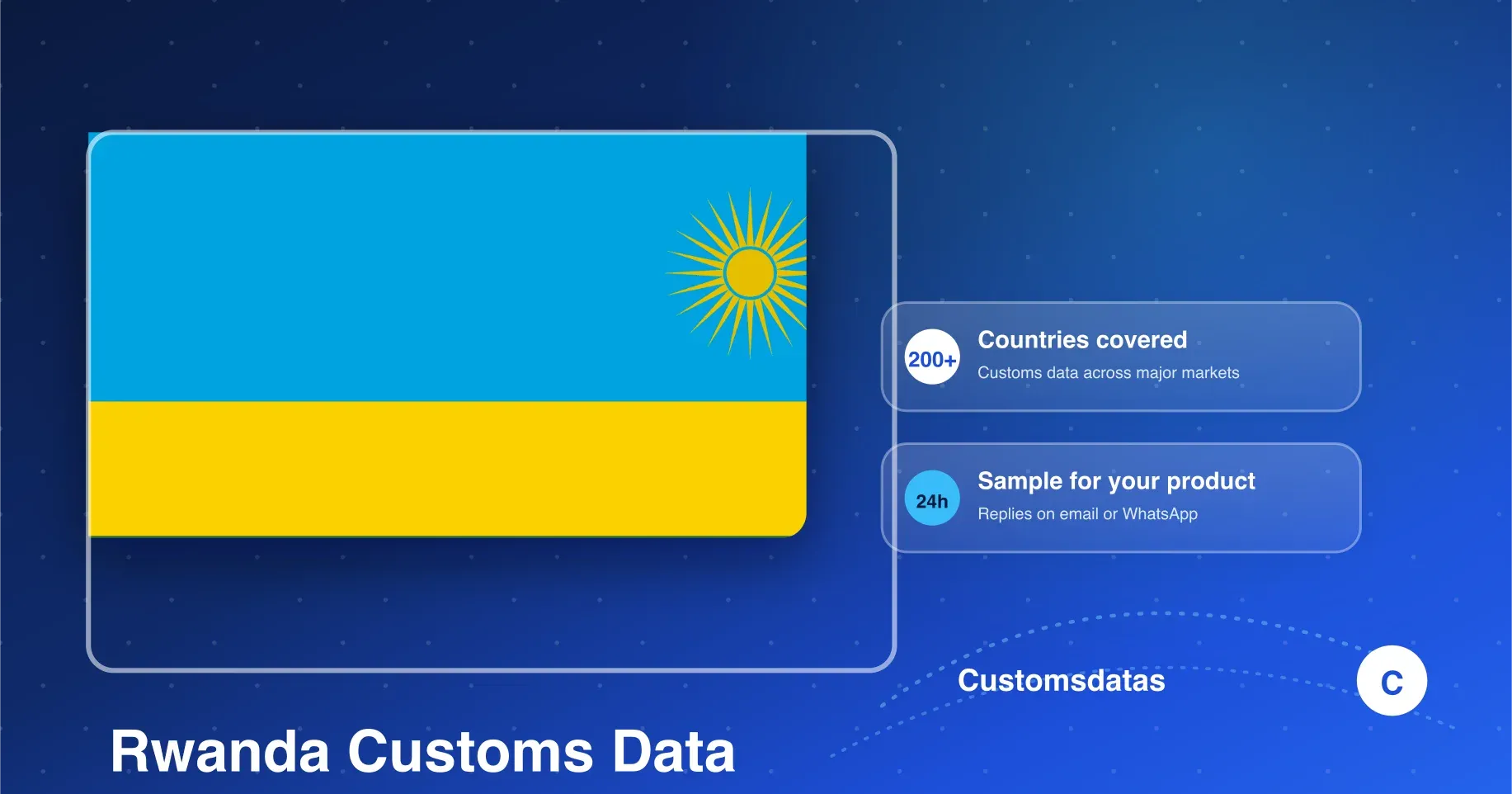
Rwanda customs data research calls for an unusually careful distinction between what a country profile lists and what a specific record can demonstrate. The Customsdatas source matrix identifies trade and shipping data for Rwanda. Its detailed field inventory is explicitly import-side: exporters, product descriptions, HS codes, quantity, weight, value, and brand. The profile also indicates English, air availability, and updates. It does not provide a corresponding confirmed export-field inventory, so a responsible guide cannot silently mirror those import fields into an export dataset.
That asymmetry creates a useful research discipline. Rather than treating shipping information, import records, and company leads as interchangeable, design a two-track investigation and document where each conclusion originates. The result should be a reviewable trail of observed records and unresolved questions, not a synthetic list of supposedly verified buyers.
Establish an Import-Only Field Contract
Begin with the exact scope of the Rwanda import view. Write down the seven listed field names and mark them as fields to check, not as guaranteed values for every result. Select a small sample across your target product codes and record which cells are populated. Preserve original descriptions, original units, and dates. The absence of a value or brand in one row must remain visible in your working file; filling blanks from nearby rows would make the evidence appear stronger than it is.
Create a second column for what you would like to know but have not confirmed, such as the role of a consignee, a transport milestone, or a current business contact. Do not promote those wishes into data fields. The matrix does not establish an export-side list for Rwanda, and an import-side exporter name is not proof that the same party appears in any export view. A source contract makes those boundaries explicit before an analyst starts joining datasets.
Shipping Records Are a Different Evidence Stream
The profile includes shipping as a data type, but that label alone does not disclose the exact shipping columns, geographic coverage, or linkage keys. Open the shipping view separately and inspect a few actual results. Record the observed dates, identifiers, parties, and mode labels if the interface supplies them. Only then decide whether a shipping row can be linked to a Rwanda import record. A similar company name or nearby date is not a verified shipment-level join.
A useful test has three outcomes: confirmed match, possible match, and no supported match. Reserve the first for cases with enough common evidence to justify it. Put name-only similarities into the second group, with the missing keys documented. Keep unrelated shipping observations in the third group. This approach avoids a common analytical error: combining two individually useful sources into a fictional single transaction merely because both mention a country or product category.
Design a Product Search That Can Survive Ambiguity
HS codes help define a repeatable search, but they should not replace the product descriptions found in Rwanda's listed import fields. Start with a limited code family and capture several description variants from the returned records. Compare terminology without assuming every phrase has the same commercial meaning. If a description is generic, keep that uncertainty rather than rewriting it as a precise product. Preserve the source wording alongside any normalized keyword used in your analysis.
Brand adds another clue, not a final identity check. A brand can appear in multiple product contexts, and a company name can resemble a brand without representing its owner. Build a simple product-evidence matrix: observed description, observed HS code, observed brand, and a note on consistency. Flag disagreements for manual review. When you cannot resolve a contradiction from the record itself, exclude it from any confident product-level claim and retain it as a research lead.
No Price Claims From Mixed Measurement Bases
Rwanda's import inventory lists quantity, weight, and value, which may support measurement checks on sampled records. It does not specify a single unit of quantity, a valuation basis, or whether each row represents an identical commercial package. Inspect units before performing calculations. Keep the source quantity and source weight untouched, and place conversions in separate columns with their assumptions. Compare only records that have compatible units and product definitions.
Do not interpret customs value as a current purchase offer. Even a plausible ratio of value to quantity can reflect different reporting conventions or shipment contents. Use derived figures to detect anomalies for further investigation, not to advertise a supplier's price. A record with high value and unclear quantity may be less actionable than a smaller record with a traceable description and company name. The purpose of the audit is to identify what deserves verification.
Date Stamps and Mode Labels Must Be Observed
The Rwanda profile marks updates and air availability, but a researcher should still distinguish capability flags from observed transactions. If a shipping or trade interface exposes transport mode, save the actual mode value for the selected record. If it does not, leave mode unverified. Do not label every Rwanda result as air freight merely because the profile has an air indicator. Similarly, a filter for recent dates is useful only when the returned record dates are inspected.
For repeat monitoring, save the original query and sample identifiers. Revisit the same query after a defined interval and note whether new records, changed values, or simply a different sort order appear. The date you accessed the interface is not the date the trade occurred. A dated comparison log lets a team describe evidence freshness precisely, while avoiding unsupported promises about daily updates or real-time business activity.
Build a Lead Brief With Explicit Source Boundaries
A practical Rwanda lead brief should separate an import record's exporter evidence from any independently observed shipping signal. For each candidate, cite the original record or search parameters, product clues, date, and unanswered questions. If a shipping connection is only possible rather than confirmed, say so prominently. Keep an empty space for independent company verification, because a customs record cannot prove a business remains active or willing to transact today.
The final decision can be modest and still useful: investigate, monitor, or exclude. Investigate when the product clues and party name justify further checks; monitor when dates or fields are too thin; exclude when a proposed connection depends on assumptions. This controlled classification gives sales teams something they can challenge and improve. It is more defensible than claiming that trade and shipping data automatically produce a verified customer database.
Frequently Asked Questions
Does the Rwanda profile confirm export-side fields?
No. The detailed matrix supplied for this guide confirms seven fields on the import side only. It does not provide a matching export-field list. Any export-side claim requires a fresh check of actual source evidence rather than inference from the import view.
Can shipping data be automatically matched to an import record?
Not on the basis of the data-type label alone. Inspect the actual shipping records for compatible identifiers, dates, and parties. Mark uncertain name-based links as possible matches, not confirmed transactions, and keep the source views separate.
Does a listed update or air flag guarantee recent air shipments?
No. Both are profile indicators. Confirm the transaction date and transport mode on individual records where available, and state when those attributes cannot be observed. Retrieval time should never be substituted for transaction time.
Request a free Customsdatas consultation to inspect a Rwanda import sample, test whether shipping evidence can be linked responsibly, and prepare a source-labeled research shortlist.