Country Guides
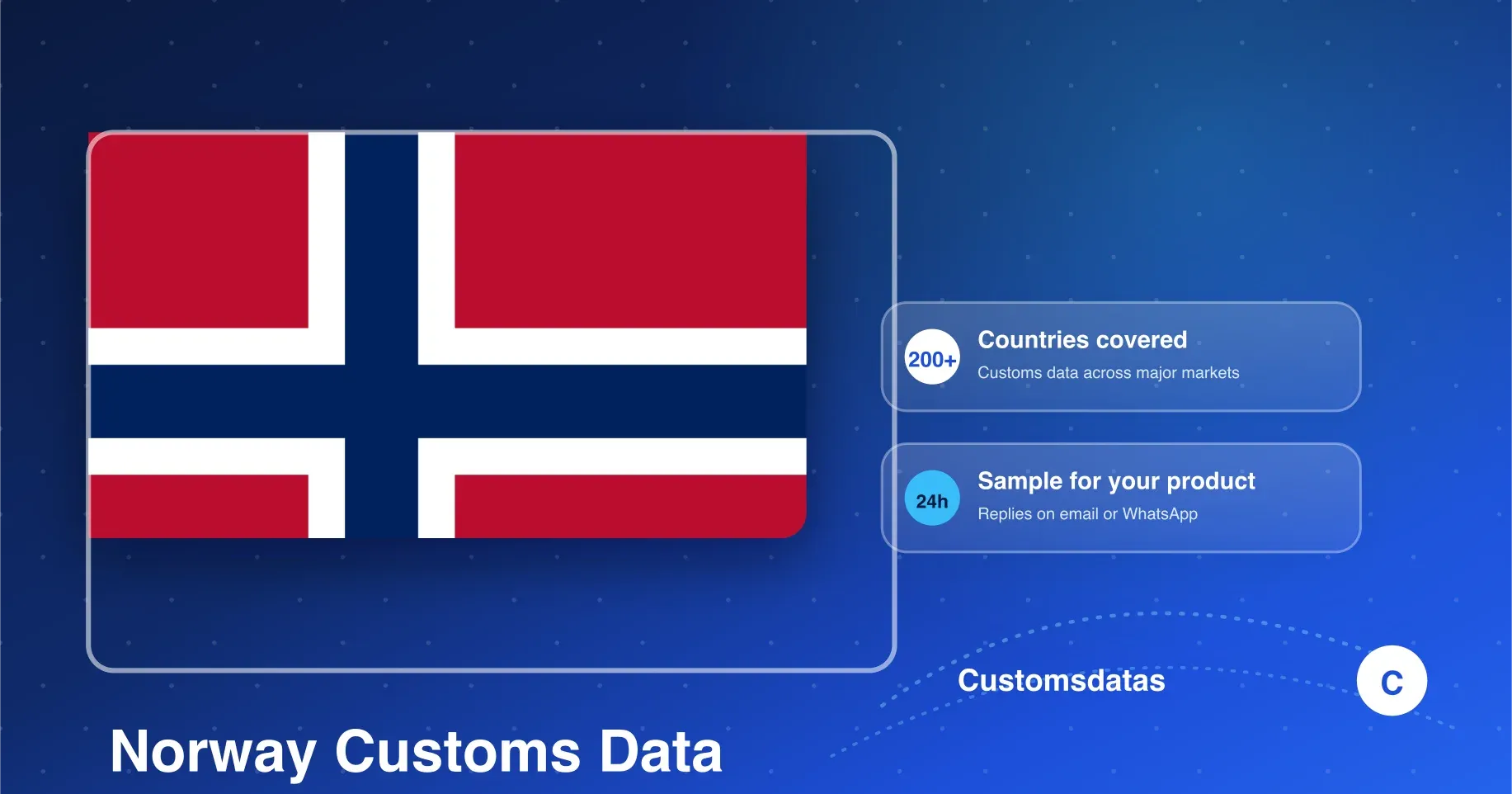
Norway Customs Data (2026): Separate Vessel Milestones from Cargo Evidence
A Norway shipping research workflow for separating reported vessel events from verified cargo-specific evidence.
Why a Norway shipping signal needs two timelines
The Customsdatas country queue identifies Norway with a shipping data type. That is a valid starting fact, but it does not verify that a specific vessel event, bill of lading, port call, product code, carrier, consignee, or shipment value is available. Analysts can nevertheless slip from a statement about a ship's movement into a statement about a buyer's goods. A two-timeline audit prevents that category error. One timeline describes transport events, if a relevant source actually provides them. The second records evidence about a particular cargo movement, only when the sample supports that connection. These are different claims, and neither should inherit certainty from the other.
Decide what the transport clue is meant to support
Before inspecting a sample, define the next decision. Perhaps the commercial team wants to assess whether a shipping route deserves research, or whether a candidate shipment merits a deeper request. Neither question proves that Norwegian companies purchased a product. Write a decision rule and its alternative: proceed to a scoped sample request, defer until documentation arrives, or reject the original inference. Specify the cost of a mistaken inference, including outreach wasted on a transport event that never established the cargo of interest. Keep the decision narrow enough to reverse. A transport clue may prioritize research without qualifying as a verified commercial lead.
Draw an evidence ladder before looking at a port name
Construct a simple ladder with distinct steps: the existence of a reported transport event, its geographic relevance, its temporal fit, its relationship to a cargo document, and its possible connection to an identifiable transaction. Treat these as verification tasks rather than confirmed Norway fields. A port name on a carrier schedule, for example, cannot by itself establish the origin, final destination, contents, or ownership of particular cargo. If the sample lacks any step, preserve a gap in the ladder instead of skipping to the last rung. This approach also clarifies what a source provider must demonstrate before the team describes the material as shipment-level evidence.
A cargo clue needs a custody trail
For any actual sample returned, record the source name, access date, asserted event period, source version, scope statement, and documentation reference where available. These are analyst-side audit items, not promises that Customsdatas exposes corresponding columns. Preserve the original sample without editing its labels. An old source snapshot may differ from a later one because of corrections or delayed reporting, but a difference cannot be attributed to a particular Norwegian route without inspection. Maintain separate receipts for carrier schedules, port references, and any cargo-level documentation. The audit becomes more reliable when claims can be traced to the exact evidence object that supports them.
Challenge the first geographic interpretation
A vessel associated with a Norwegian port does not automatically identify a Norwegian buyer, a Norwegian-origin product, or the last destination of a container. Separate port of call, declared location, possible transshipment, and actual commercial counterparty into independent questions. If the provider's sample describes a geographic rule, quote that rule accurately in the working paper. If it does not, keep country attribution provisional. Do not treat the spelling of one destination as a universal definition of national trade. When geographic boundaries are uncertain, frame the output as a route-research clue rather than a confirmed national import or export flow.
Compare event time with document time cautiously
Transport reporting can involve planned, observed, and subsequently corrected milestones; whether those states exist in the actual source must be verified. Build a proposed chronology that keeps each timestamp's meaning alongside the observation. Do not assume a schedule is proof of arrival or a departure reference is proof of customs clearance. If a relevant cargo document exists, determine how its date relates to transport milestones rather than aligning records solely because dates look close. A near match is a candidate link to examine, not an identity assertion. A mismatch may result from different event definitions and should not automatically be labeled an error.
Try to falsify the cargo story with unrelated goods
Take a proposed explanation such as “this Norwegian route indicates demand for our product” and ask which alternative situations could produce the same transport clue. A ship may carry different cargo, a port may be an intermediate stop, or records may describe the same movement at different reporting stages. These are hypotheses, not claims about any real vessel. Identify what a valid cargo-specific source would have to show to distinguish the alternatives. If no suitable source is available, the conclusion remains unconfirmed. A useful negative-control question is whether the same evidence would look equally persuasive for an unrelated product concept.
Prohibit account-level leaps from transport metadata
A shipping category does not guarantee company names, importer identities, accurate consignee assignments, shipment weights, or reachable buyer contacts. Do not claim any of those fields exist in Norway unless a lawful sample explicitly verifies them. Even when a transport document names an entity, check the role and permissible interpretation before calling it the purchaser. An agent, carrier, or intermediary may be connected to a movement without being its final buyer. Keep the initial shipping workflow separate from company-level due diligence. If prospect identification is the objective, request an appropriate record and validate both its field definitions and permitted uses.
Capture the uncertain join as a visible research result
Deliver a concise ledger containing each proposed event-to-cargo link, the evidence receipt, matched definitions, unresolved gaps, and confidence expressed in plain terms. Avoid inventing a numeric probability for a match with no calibration evidence. Explain which claims are verified, which are only plausible, and which are unsupported. Preserve rejected candidate links so reviewers can see whether the analyst excluded inconvenient discrepancies. The goal is to make it possible for a colleague to rerun the attribution process, not to maximize the number of apparent shipments in a sales slide. Explicit uncertainty supports more responsible commercial screening.
Finish with one source-scoped Norway experiment
Choose a narrow route or product question and request a relevant Norway shipping sample with a description of its actual available fields, time conventions, geographic rules, and evidence boundaries. If the sample cannot connect vessel activity to the proposed cargo question, request the missing source type or stop the inference. If the link is supported, validate one event and one cargo context before commissioning a broad study. Record the minimum acceptable receipt for every promoted claim. The next step should resolve a particular rung of the evidence ladder, rather than treating shipping activity as proof that named businesses have bought or sold a product.
Frequently Asked Questions
FAQ: Does Norway shipping coverage guarantee port-call and bill-of-lading fields?
No. The queue establishes only a shipping data type. Any port, document, vessel, route, cargo, or counterparty fields must be verified against the actual source-scoped sample before use.
FAQ: Can a vessel visiting a Norwegian port establish a buyer's demand?
No. A transport event and a buyer transaction are different types of evidence. Geographic attribution, cargo contents, commercial role, and any document linkage require separate confirmation.
FAQ: What should I do when the event and cargo timelines disagree?
Preserve both source receipts, check whether the dates describe the same type of event, and keep the proposed link unresolved until definitions and supporting evidence are reconciled. Do not force a match from nearby dates alone.
Request evidence that connects Norway transport events to cargo
Explore Norway customs data with Customsdatas by requesting a source-scoped shipping sample for a precisely defined route or product research question. Ask which transport milestones, geographic boundaries, document types, and cargo links the sample actually supports, rather than assuming a complete shipment record exists. Build the vessel and cargo timelines separately, record unresolved joins, and advance only the claims that can be traced to reliable source evidence.