Country Guides
Kenya Customs Data (2026): Build an Import-Side Evidence Trail Before Contacting Suppliers
Audit Kenya import-side exporter, description, HS code, quantity, weight, value and brand fields without assuming export-side coverage or current supplier status.
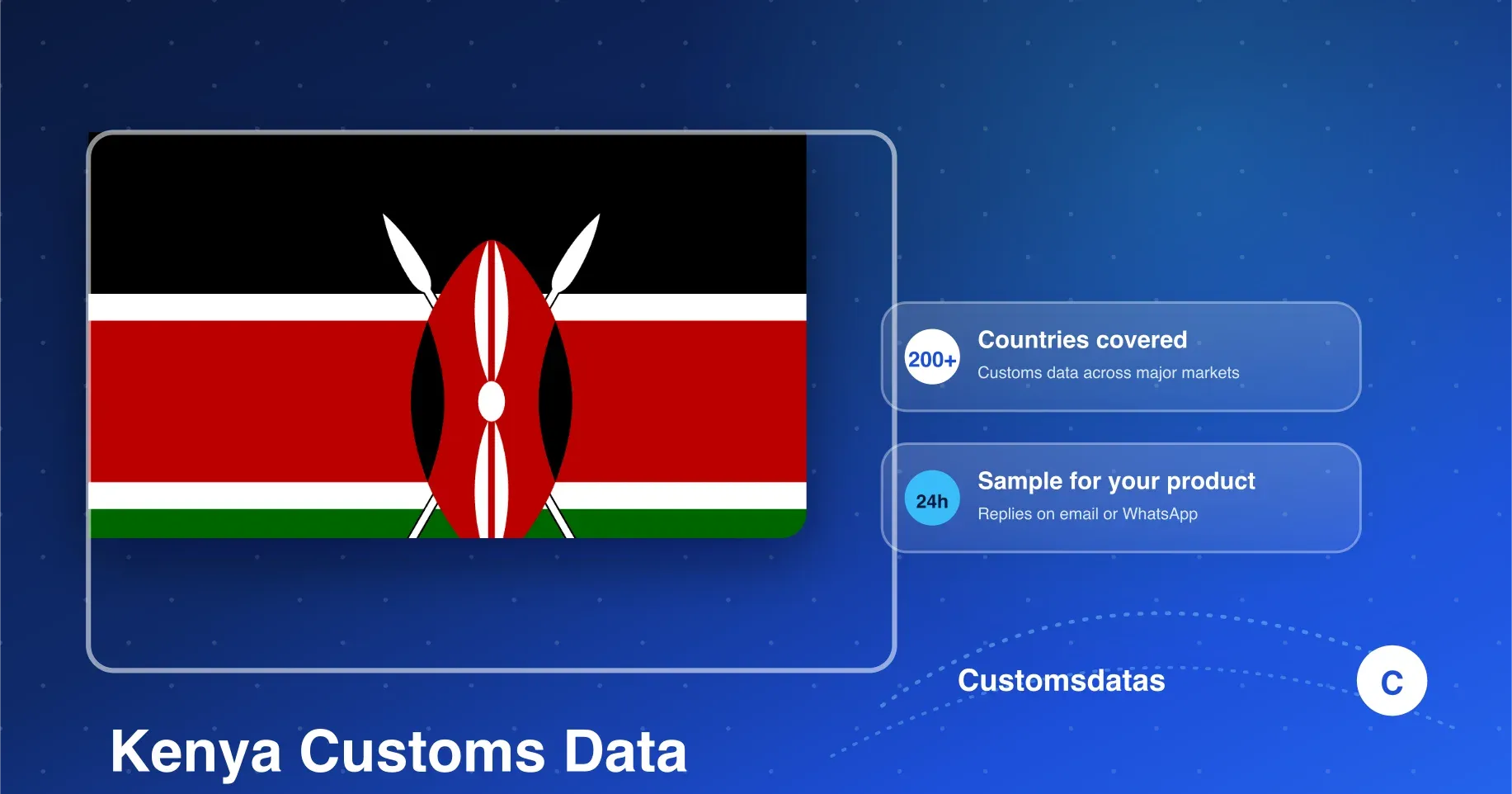
Kenya customs data is useful when a sourcing team needs a defensible starting point rather than a long, unexplained list of names. The current Customsdatas country matrix identifies trade data and confirms an import-direction field set containing exporters, product descriptions, HS codes, quantity, weight, value and brand. It does not provide a corresponding confirmed export-direction field list. That asymmetry should shape the research process from the first search.
The practical question is not whether every Kenyan shipment can be reconstructed. It is whether an individual record can support a specific next step: identify a potential exporter, understand the described goods, check a classification clue, and decide whether the company deserves independent verification. The record is evidence to inspect, not a guarantee of a current commercial relationship.
Begin with the direction the source actually documents
The confirmed Kenya fields are attached to the import direction. In this source matrix, an exporter field can help identify a named party associated with an import record. That does not establish that the named company is a verified manufacturer, a current supplier, or a suitable prospect. Preserve the original direction label in exports and notes so another analyst can retrace the interpretation.
Do not silently mirror those fields into the export direction. A missing export-side field list means its availability has not been established in this reference, not that the direction contains no records anywhere. If the project requires export-side names, first inspect a representative live sample and record exactly which fields are returned before changing the research scope.
Build a seven-field evidence card for each candidate
For each promising row, capture the exporter text exactly as shown, the product description, HS code, quantity, weight, value and brand where present. Keep the source date, query, filters and direction alongside the row. This compact evidence card makes later checks reproducible and reduces the temptation to merge unrelated businesses with similar names.
Treat product descriptions as search clues, not as standardized specifications. HS codes are classification signals that may require review at the appropriate level of detail. A brand string is not proof of trademark ownership or authorized distribution. Before making a commercial claim, compare the candidate against independent company information and the actual product offering.
Test quantity, weight and value together
A record can appear convincing because it includes several numeric columns, but their meaning depends on units and context. Check whether quantity is reported in pieces, packages or another measure, and whether weight represents gross or net mass. Do not calculate a unit price by dividing value by quantity until the currency, units and valuation basis have been verified.
Use the numeric fields as anomaly prompts. For example, two rows with similar descriptions but dramatically different weight-to-quantity ratios deserve inspection rather than automatic aggregation. Record unresolved differences in a review column. A transparent unresolved item is better than a polished but unsupported price estimate.
Separate the candidate list from the outreach list
Start with a broad candidate table, then apply a second verification gate before outreach. Look for consistent identifiers, plausible product alignment and independently reachable business details. Keep an explicit distinction between a name found in trade evidence and a company whose identity has been confirmed. This prevents a source-field label from becoming an unearned sales qualification.
For purchasing teams, the useful output is a short list with reasons to investigate each entry. For exporters researching a market, the same evidence can reveal product categories worth examining, but it cannot alone prove buyer intent. The direction of the record and the role of the named party must remain visible in any summary.
Use the Kenya profile's operational flags cautiously
The source matrix marks English as the language and indicates air data and updates as available. These are profile attributes, not promises that every search includes an air shipment or that a particular record was refreshed today. Verify the available mode and latest visible record date in the actual result set before reporting coverage or freshness to stakeholders.
An analyst should save a small sample from each relevant filter combination and note any empty columns. If a promised field is blank in the sample, narrow the claim to what was observed. A fresh query and a reproducible sample matter more than a generic statement that a country database is always current.
Make the research repeatable across colleagues
Use one shared worksheet with columns for search purpose, source direction, query date, evidence fields, identity checks, exceptions and next action. Keep the raw exporter spelling separate from normalized company names. Where two records appear to refer to the same business, document the reason for the match instead of relying on an automated text similarity score alone.
The strongest handoff includes both positive and negative evidence. State which fields were confirmed, which were absent or untested, and which conclusions still require external checks. This approach makes Kenya research useful to procurement, sales operations and compliance teams without implying a level of certainty the source does not provide.
What a responsible result should look like
A finished Kenya research brief might contain a small set of candidates, each linked to the specific import-side record that justified further review. It should also explain the sampling period, the limits of the export-side evidence and the treatment of quantities and values. Avoid presenting the shortlist as a comprehensive census of Kenyan suppliers.
Customsdatas provides tools for exploring customs and trade information across markets. The right workflow is to inspect the Kenya sample, verify the field coverage relevant to your question, and then decide whether a broader extraction is justified. That is more reliable than buying a large list before defining what counts as a useful lead.
FAQ: Does Kenya customs data confirm exporters in both directions?
No. The current country matrix confirms an exporter field in the import-direction list only. It does not establish the same field for export-direction records. Check an actual export-side sample before making any claim about that direction.
FAQ: Can I use Kenya trade values to calculate supplier prices?
Not without further checks. Confirm the unit of quantity, the currency, the valuation basis and the comparability of the records first. A recorded trade value is not automatically a supplier quotation or a current market price.
FAQ: Are Kenya air records and updates always available for every query?
The profile marks air and updates as available, but that is not a row-level guarantee. Check the selected filters, sample records and visible dates to establish what is actually present for your use case.
Explore Kenya customs data on Customsdatas, request a sample aligned with your product and direction, and contact the team to discuss the evidence fields you need before committing to a larger research workflow.